The one thing AI can’t do
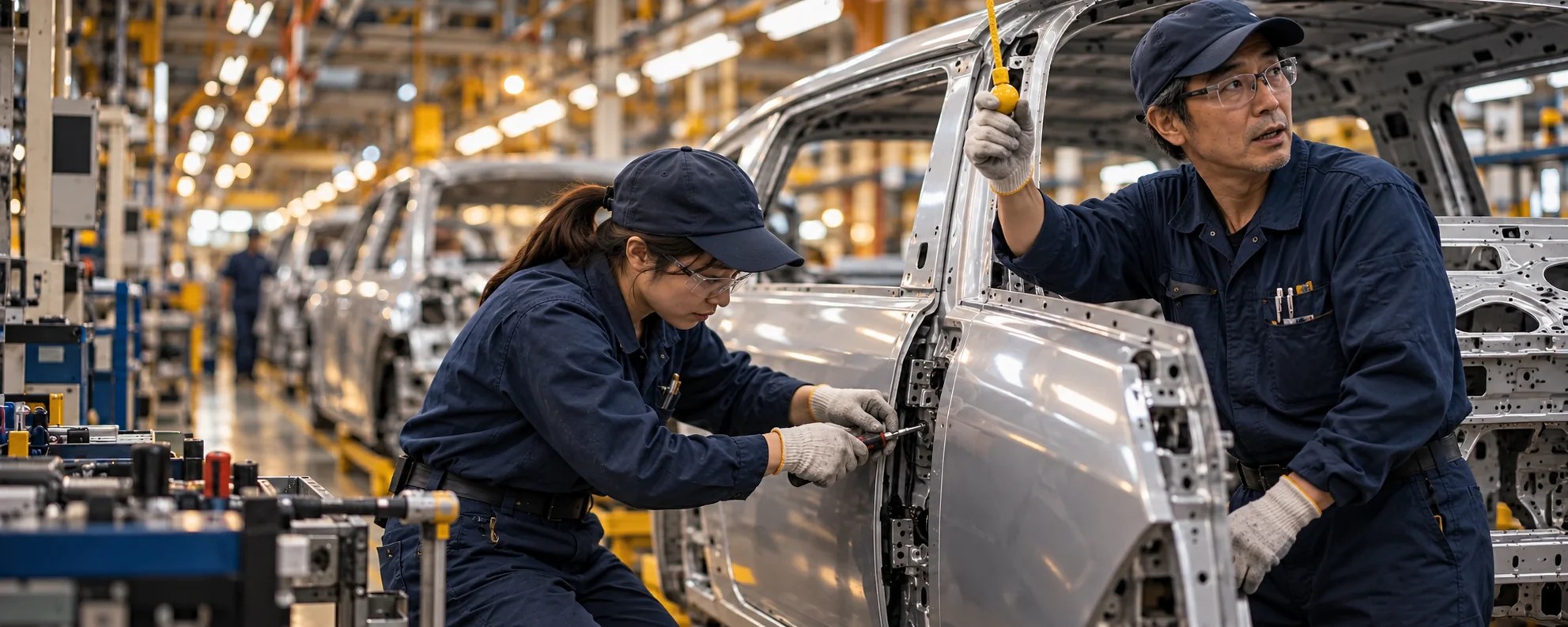
I came across this story about Toyota recently and I’ve been thinking about it a lot. On the surface, it’s a story about cars. But it turned out to be a story with some surprisingly important parallels for the age of AI.
Back in 1982, General Motors shut down one of its worst-performing factories in Fremont, California. Two years later, Toyota reopened the exact same building as part of a joint venture with GM. They called it NUMMI.
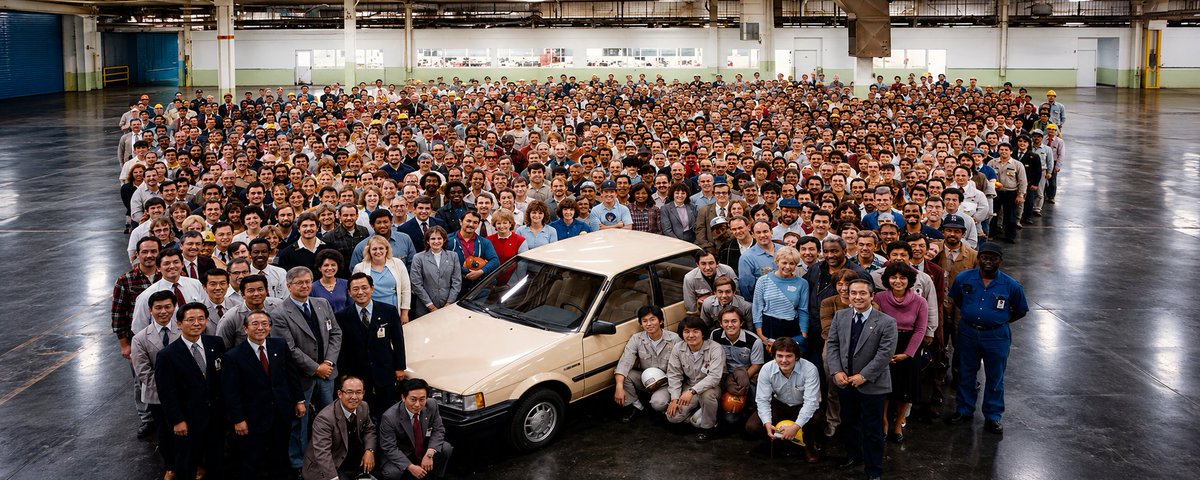
Within about a year, that factory was building Corollas at the same quality as Toyota’s plants in Japan. Same defect rates. Same productivity. The factory GM had written off was suddenly performing like one of the best in the world.
Interestingly, John Shook, a NUMMI manager, noted that one of the things that GM believed made them cutting edge at the time but contributed to their downfall was that they “wanted to automate out their human problems”.
But it gets even stranger.
NUMMI wasn’t a secret Toyota factory hidden behind high fences. It was a joint venture. GM’s own engineers and managers worked there for years. Toyota taught them how the system worked, they toured the plant. Later, two Harvard researchers, Steven Spear and Kent Bowen, even published the underlying principles of the Toyota Production System in the Harvard Business Review.
Think about that.
One of the greatest operational systems ever built.
The recipe was on the table.
And somehow, GM still couldn’t copy it.
That surprised me. They had everything: the people, the factory, the processes, years of firsthand exposure. They copied the kanban cards, the factory layout. They copied the famous cord that lets anyone stop the production line when someone spotted a problem. Before long, factories all over the world had done the same.
John Shook, mentioned earlier, said something about the cord that made everything click:
“the way that problems are treated reflects your corporate culture.”
The cord wasn’t valuable because it was a cord. It was valuable because it existed inside a culture where admitting a problem was rewarded instead of punished. In a different culture, the exact same rope would hang there untouched.
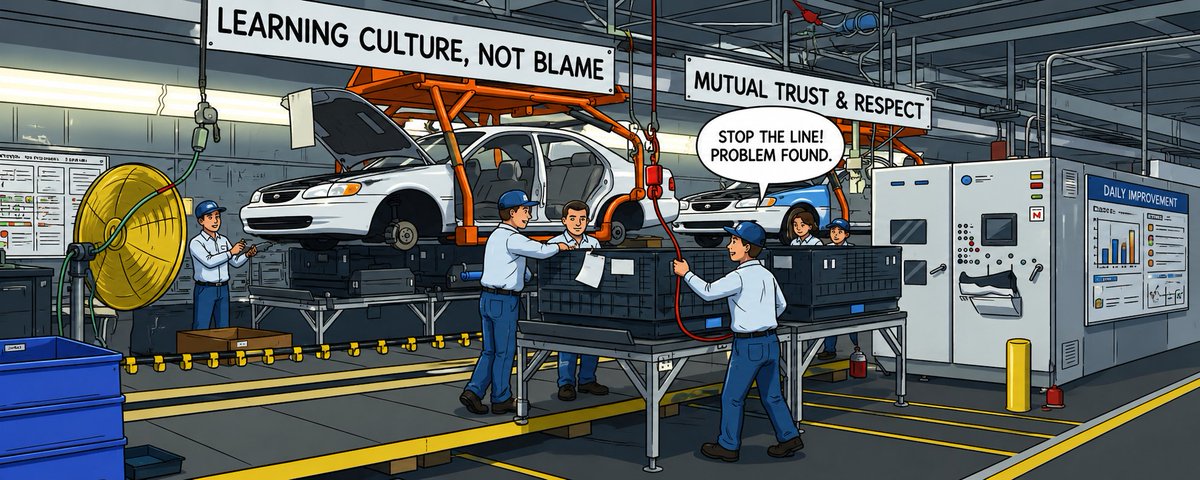
You can copy a rope.
You can’t copy fifteen years of people developing a shared way of thinking.
Most competitive advantages disappear once everyone copies the trick. This one survives even after the trick has been explained. Your competitors can know exactly how you work and still be unable to become you.
I think GM made a mistake that’s incredibly easy to make.
They copied the visible artifacts and skipped the years of reps that led to their creation. They tried to shortcut capability by copying the visible artifacts instead of earning the experience that produced them.
And that’s when it stopped feeling like it was about cars and started feeling like it was about AI.
AI offers us exactly the same shortcut.
It gives us the finished artifact: the working function, the clean explanation, the polished paragraph, the completed design. It makes it incredibly easy to skip the part that actually changes us.
The struggle. The iteration. The mistakes. The understanding that only comes from working through the problem yourself. Capability isn’t something you can download. It’s something you become.
That’s why I’ve started asking myself a different question: When the model writes a function and the tests pass, should I still read the code? If I’m honest, my instinct is usually to move on. The work appears to be done. Reading the code feels like revising for an exam you’ve already passed. But maybe reading the code isn’t about checking the model. Maybe it’s about making sure I don’t skip the learning.
Maybe every time I slow down to understand why the code works, I’m doing the one thing they couldn’t shortcut. I’m putting in another rep.
The playbook is no longer scarce. The tools aren’t scarce. Soon, the models won’t be either.
When everyone has access to the same thing, the advantage won’t come from producing stuff faster. It’ll come from becoming the person who understands them.
That’s what I think Toyota accidentally demonstrated. They gave away the playbook. They couldn’t give away the years of becoming the organization that wrote it.
AI gives us the artifact. It can’t give us becoming the kind of engineer who could have produced it.
You can outsource the artifact.
But you can’t outsource the learning.
In the long run, that’s the moat.